Strength training for women over 40: where to start
Coach Emi · 8 min read · Published
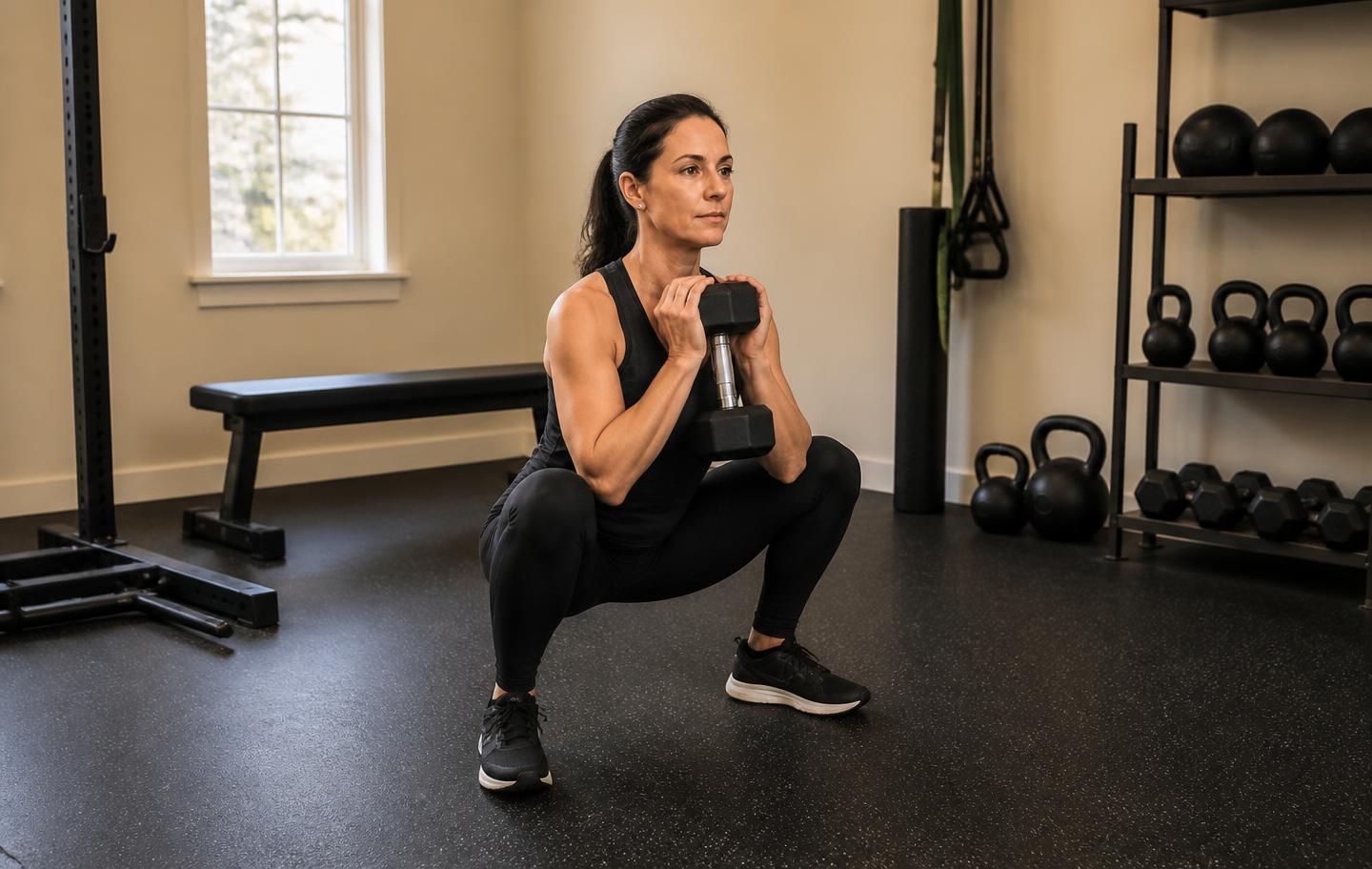
There's a question I hear often from women arriving at 40, 45 or 50: is it too late to start strength training? The short answer is no. The more honest answer is that this is actually one of the best times to start.
Not because there's anything to “make up for,” but because the body at this stage responds very well to training that's structured, progressive and consistent. What changes isn't your capacity to improve — it's how you approach the process.
In this article I'll walk you through where to start, which movements to prioritize, and how to think about progress without comparisons that don't help you.
Why strength train after 40?
Strength training isn't only about how you look. It's an investment in your ability to move through daily life with ease: carrying groceries, getting down on the floor to play with your kids or grandkids, climbing stairs without a second thought, standing up from a low chair without needing to push off with your hands.
Past 40, the body naturally tends to lose muscle mass over the years without a consistent stimulus to maintain it. Regular strength training is one of the most direct tools to preserve that muscle, and it also supports balance and coordination — two qualities that get far less attention than they deserve.
There's also talk about how progressively loading the body may support bone health, though that's worth holding carefully — it's not a medical promise, and it doesn't depend on training alone. What I can tell you with confidence, because I see it week after week in the studio, is the shift in confidence in women who train strength consistently: they carry themselves differently, they move differently, they talk differently about what their bodies can do.
You don't need to start strong to start strength training
One of the biggest myths out there is that you need to already be “in shape” to start a strength program. It's the opposite: the program is exactly what gets you in shape, and it's designed to meet you where you are today, not where you think you should be.
If you've never lifted weights, or it's been years since you trained in a structured way, the starting point isn't a loaded barbell or an intense routine. It's learning to move well, with loads that let you feel the correct pattern, and gradually adding weight, reps or complexity from there.
The goal of your first session isn't to sweat a lot. It's to learn to move well so you can progress without getting hurt.
The basic movements I'd teach first
When I start working with a woman who wants to build strength, I don't hand her a long list of different exercises. I prioritize a handful of movement patterns that form the foundation of nearly everything else:
- Squat pattern: the movement behind sitting down and standing up from any surface.
- Hip hinge: the base for lifting objects off the floor without straining your lower back.
- Push: moving something away from your body, like pushing a heavy door.
- Pull: bringing something toward you, like opening a drawer or carrying a backpack.
- Carry: walking while holding weight, one of the most functional movements there is.
- Core stability: not just abs, but the ability to keep your trunk stable while the rest of your body moves.
Mastering these six patterns with good technique gives you a solid base for almost any goal you go after next, whether that's running better, carrying your kids without discomfort, or simply feeling more capable in daily life.
How many days a week?
There's no magic number that works for everyone, but for many women just starting out, two to three structured sessions a week can be a practical starting point. That frequency allows you to build the habit, gives your body time to recover between sessions, and lets you see progress without training taking over your whole week.
What matters most isn't the exact number but the consistency: three 45-minute sessions that actually happen every week are worth far more than a five-day plan that only gets followed halfway. Depending on your training history, your schedule and how your body responds, that frequency can be adjusted over time.
Common mistakes
I see the same patterns repeat again and again when someone tries to start on their own, without guidance to adjust the process to their reality:
- Doing too much, too soon: starting with five days a week and an intensity your body isn't ready to sustain yet.
- Training randomly: switching routines every week without giving your body time to adapt and progress.
- Sticking only to cardio: assuming walking or running is enough and leaving strength out entirely.
- Comparing yourself to your younger self: measuring your current progress against a body and a life that no longer exist.
- Ignoring recovery: not sleeping enough, not eating enough, or not resting between intense sessions.
How to know if you're progressing
The scale is probably the worst indicator of progress when we're talking about strength. There are far more useful signs, ones that actually reflect what you're building.
- You can lift more weight or do more reps than a few weeks ago with the same exercise.
- You move with more control: your technique feels more stable and less forced.
- Everyday tasks — carrying, climbing stairs, getting up off the floor — feel easier.
- You recover better between sessions: less accumulated fatigue, less lingering soreness.
- Your relationship with your body shifts: more confidence, less constant criticism.
If you have pain, a previous injury or a medical condition, check with a qualified healthcare professional before starting or changing your training. This article is general information and doesn't replace an individual assessment.
An approach that fits your life
After years of training women, one thing I see consistently is that the best program isn't the most demanding one — it's the one that can actually be sustained inside a real life, with work, kids, curveballs, good days and hard ones.
That's why I work from what I call the EMI Method: Energy, Movement, Identity. Energy, because training should add to your day, not leave you depleted. Movement, because we prioritize patterns that translate directly into your daily life. And Identity, because strength training after 40 isn't about trying to get back something from the past — it's about building a new, stronger relationship with who you are now.
That's exactly the approach we work with in Stronger You: a space built for women who want to start (or restart) strength training with clear guidance, in my private studio in Ottawa, outdoors, or online, at your own pace and without comparisons.
What to remember
- It's not too late to start strength training after 40 — it's one of the best times to start.
- You don't need to be in shape to start; training is what gets you in shape.
- Prioritize the basic patterns: squat, hinge, push, pull, carry and core.
- Two to three structured sessions a week can be a solid starting point.
- Measure progress with real markers, not the scale.
- Check with a healthcare professional if you have pain, injuries or a medical condition.
Ready to start strength training at your own pace, with no pressure and no comparisons?