How to start training again after becoming a mom — without trying to do it perfectly
Coach Emi · 8 min read · Published
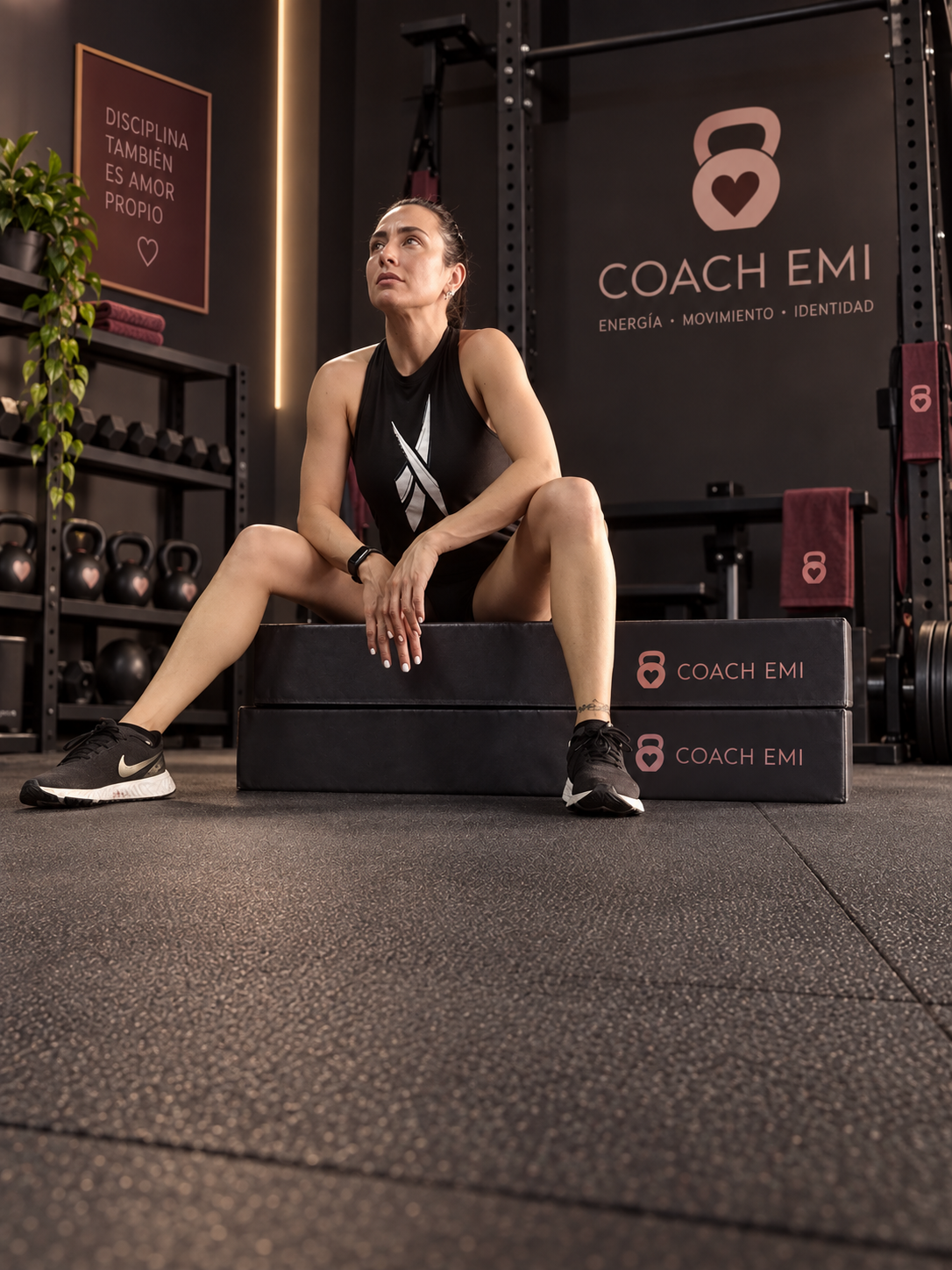
There's a moment, weeks or months after having a baby, when a mom catches her reflection in the mirror — or just sits on the edge of the bed for a second — and thinks: I need to start moving again. It's not vanity. It's something simpler: wanting to feel like herself again, to have the energy to carry the baby without her back complaining, to sleep a little better, to think a little more clearly.
That's usually where the trouble starts. Most of the advice out there about "getting back into exercise after pregnancy" is written for women who simply took a break from the gym, with nothing about how much the rest of their life changed too. It tells her to pick her old routine back up, to just be consistent, like there's no excuse. None of that accounts for the fact that her entire life is different now.
This guide takes a different approach. It isn't a medical protocol or a rehabilitation plan — it's a realistic way to think about returning to training as a mom, written from real experience coaching women through exactly this stage of life.
Why starting over feels so hard
It doesn't feel hard because of a lack of discipline. It feels hard because a new mom's body, time and energy all operate under different rules than before. Sleep is broken up, attention is split a hundred ways, and any training plan that doesn't account for that reality is bound to fall apart the first rough week it meets.
On top of that, there's a quieter pressure to "get back to normal" quickly, as if there were a clock running. That pressure doesn't help — it freezes people. Plenty of women would rather not start anything than start something they suspect they'll abandon or do "wrong."
Understanding this isn't an excuse to stay still. It's the first step toward designing a comeback that actually works — one that doesn't depend on a perfect day, your pre-baby body, or zero interruptions.
Your life changed, not just your body
It's easy to make the whole conversation about the body — posture, the midsection, weight. But what really changed, more deeply, is the entire life surrounding that body. Priorities are different, available time is different, even the way stress gets processed is different.
So getting back into training can't mean going back to a 2019 routine. It means building something new, shaped around the woman you are now, with the responsibilities you carry now. That's not a smaller or less valid version of training — it's simply the right version for this stage.
You're not trying to get your old body back. You're building strength for the life you actually have now.
Stop waiting for the perfect schedule
One of the most common traps is thinking you need to find the ideal window: once the baby sleeps through the night, once work settles back into a rhythm, once there's a guaranteed free hour. That moment almost never arrives the way it's imagined.
Instead of waiting for the perfect calendar, it helps to ask: what imperfect, interruptible window of time exists today? It might be a nap, twenty minutes before the house wakes up, or a session while someone else takes over for a while. Consistency gets built on real gaps in the day, not on ideal schedules that never show up.
Start with a realistic frequency
Another common trap is wanting to train every single day from week one, as a way to "make up" for lost time. That pace almost always ends in burnout or quitting within two or three weeks.
It's far more sustainable to start with two well-chosen sessions a week than five ambitious ones that can't be kept up. Two consistent sessions a week for two months build more real strength than fifteen enthusiastic ones that fizzle out.
- Two sustained weekly sessions beat five sessions that get abandoned within a month.
- Frequency can be increased later, once your body and your life allow for it.
- Every completed session, however short, reinforces the identity of a woman who trains.
Strength instead of punishment
Many women come back to exercise with a punishment mindset: train hard to "fix" the body, burn something off, make up for months off. That mindset isn't just exhausting, it works against you. A body that just went through pregnancy and birth doesn't need punishment — it needs to be rebuilt.
Strength training — with appropriate loads, careful technique and gradual progression — gives the body a different reason to move: becoming more capable. Lifting, pushing, carrying objects and people, holding a stable posture through a long day. That's the kind of strength a mom uses constantly, not the number on a scale.
Progressing instead of compensating
Progressing means doing a little more than last week, once the body is ready for it: a bit more weight, one more rep, a slightly harder exercise. Compensating means trying to recover everything "lost" all at once, pushing the body at a pace it isn't prepared to handle.
The difference between the two matters enormously in the medium term. Progressing builds a solid base that holds up over time. Compensating tends to end in injuries, frustration, and often in quitting all over again.
This article offers general fitness guidance, not medical rehabilitation. If you're experiencing pain, bleeding, recent surgery, pelvic-floor symptoms (such as leaking, pressure or heaviness), or any other health concern, please consult your doctor, a pelvic-floor physiotherapist, or another qualified healthcare professional before resuming exercise.
Building the identity of a woman who trains
Over time, training stops being one more item on the to-do list and becomes part of who you are. It's not just "exercising twice a week" — it's starting to see yourself as a woman who trains, who prioritizes herself, who has a space of her own within a life full of people who depend on her.
That identity gets built through repetition, not intensity. Every completed session, even a short or imperfect one, is a vote for that version of yourself. With enough votes stacked up, it stops feeling like an effort and starts feeling like who you are.
How Strong Mom works
Strong Mom is Coach Emi's program built specifically for this stage: women who want to get back into training after becoming moms, without pretending life is the same as before. Sessions happen in a private training studio in Ottawa, or outdoors, in small groups of women who understand exactly what you're going through because they're going through it too.
Emi is a trainer, a marathon runner, and a mother of two girls. She moved to Canada and now trains women both in person and online, in Spanish and English. That combination of firsthand experience and daily work with moms is the foundation of the program: progressive, realistic strength training built around interrupted schedules, and a community that doesn't expect you to have it all together.
If you're ready to stop waiting for the perfect moment and start where you are, with what you have, Strong Mom is a solid place to begin.
Key takeaways
- Getting back into training after motherhood means building something new, not recovering the old routine.
- Stop waiting for the perfect schedule — train in the real time gaps you have today.
- Start with a sustainable frequency, like two sessions a week, before increasing volume.
- Train to build strength and capability, not as punishment for your current body.
- Gradual progress builds lasting results; trying to compensate all at once tends to cause injuries.
- If you experience pain, bleeding, recent surgery, or pelvic-floor symptoms, consult a qualified healthcare professional first.
Ready to get back into training your way, without the pressure of doing it perfectly?